Skip to content

Credit card statement game: close the ledger

Pin receipts to the October ledger, catch charges listed twice, sort late refunds and rebuild the closing balance.

A free credit card statement game: 5 levels and an endless one. No sign-up, no download.

Play level 1

3 minutes. Every step explained. No sign-up.

Try one right here.

Pin the receipt to this charge.

Nettlewisk Books · $35.70

Ref R2218 · Oct 15 · posted Oct 17

Levels

5 levels. Each adds one kind of trap and keeps the old ones. Start anywhere; the marked one is next for you.

What you learn to see

  • One pin per posting

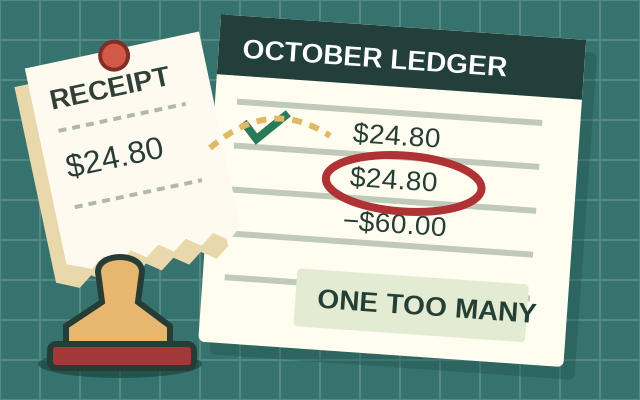
    Match the receipts, then review the posting journal. Attach an electronic confirmation to a genuine entry, or show which record already supports a duplicate.

  • Same price, different purchase

    Compare reference numbers and dates. Real receipts can look almost identical.

  • The midnight boundary

    A pending purchase and a refund that posts in November stay out of October's balance.

  • Close the folder

    Stamp a wrong amount or missing posted credit, then reconstruct the new balance from last month and confirmed activity.

Got a real one in front of you?

Examples that explain themselves, calculators and lists.

Five checks for a monthly statement

This is a reading checklist, separate from the game's fictional files.

  1. Read the billing period.The closing date separates this statement from later activity.
  2. Find the opening and closing balances.The previous balance is the beginning of the period; the new balance is its end.
  3. Compare each posted transaction with the supporting record.The price alone is not enough to distinguish two purchases.
  4. Separate payments, posted credits and pending activity.Payments and credits reduce the balance when reflected in the period; later activity is separate.
  5. Look at fees, interest and the due date.These are separately identified fields. The minimum payment is not the same field as the new balance.
  6. Identify the disputed entry and the bill it is on.The issuer's statement gives directions for reporting billing errors. The CFPB explains the investigation process.

A statement is one period, not a credit report

A monthly credit card statement lists account activity for a billing period. A credit report instead tracks credit accounts and how they have been paid. In this game the statement is a printed draft, and the little slips include saved records of when each transaction posted.

What the amounts mean

A previous balance carries over from the prior statement. Purchases and any fees or interest increase it. Payments and credits reduce it. A new balance is the amount at the end of that period. The minimum payment and payment due date are other fields on the bill.

How the game works

Reconcile means checking two records against each other. Here you turn over slips in any order, pin a match to a statement line, stamp a discrepancy or park a slip for the next period. Then check remaining lines against the posting journal. Some are distinct electronic purchases even if the price matches an earlier paper receipt. Attach the record that supports your decision. When the bundle is checked, add the confirmed amounts and close the statement. New bundles are dealt from seeds; some are clean. The example guide shows the full statement sections.
Credit card statement: questions people ask

What is a posting date?

A date when an item is recorded on the card account. It can differ from the sale or return date.

Are two charges the same just because the amounts match?

No. Details such as dates, references and saved receipts distinguish them in this exercise.

Does a pending purchase belong in the printed statement?

The statement covers its closed billing period. The game distinguishes items posted by close from pending or later activity.

Do the game's totals tell me what to pay on my real card?

No. Every file is invented for practice. Real statements can include other charges, terms and disputed balances.

Try something else

More like this: financial literacy games, life skills games, consumer math games.

Fictional statements and receipts for reading practice only. No real card data, payment instruction or determination of a billing dispute.