Brindle Row
Apartment renting game: find what does not match
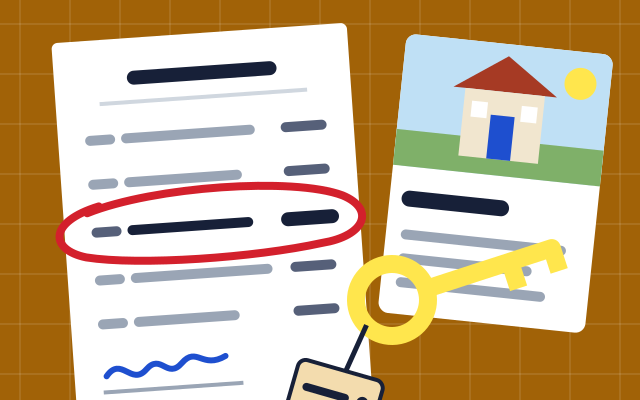
The listing promised one thing, the apartment lease says another. Find the lines before somebody signs.
A free apartment renting game: 7 levels and an endless one. No sign-up, no download.
Play level 1
4 minutes. Every step explained. No sign-up.
Try one right here.
Joyce was told what stands in yellow. One line of the lease says something else. Press it.
Press the line that does not fit this:
- Email: 30 days' notice is all we ask.
- Listing: parking $55 a month.
- Listing: rent $1,980 a month.
- Email: we put in a new stove before you move in.
- Listing: cats welcome, $35 a month pet rent.
Levels
7 levels. Each adds one kind of trap and keeps the old ones. Start anywhere; the marked one is next for you.
- 1The listing saidLay the lease next to the listing and compare them line by line.4 min
- 2Fees and datesCount the days, check the deposit, and read the card of the state.5 min
- 3The clausesFind the promises that did not make it into the lease.6 min
- 4Wear or damage?Sort what the landlord wants money for: ordinary wear, or damage.4 min
- 5Moving outCheck a deposit letter against the photos, the invoices and the state's rule.6 min
- 6Is this apartment real?Tell a real listing from one that is after your money.5 min
- 7How many are there?Nobody tells you how many lines are off. Some papers are right.9 min
What you learn to see
The price you saw
A rent that grew by $60, a parking space that was included, a fee that nobody mentioned.
Promises
The new stove, the cat, your mother's two weeks: what was promised and did not make it into the lease.
The way out
Notice, renewal and leaving early. The last section is the one to read first.
Wear or damage
More than fifty things a landlord may want money for. Sort them, and check the deposit letter.
Real or fake
Listings and messages. Some apartments belong to somebody else, some are a car wash.
Got a real one in front of you?
Examples that explain themselves, calculators and lists.
- Lease agreement exampleA filled-out lease: press any clause to read what it means and what to look for.
- Normal wear and tearSort photos into wear and damage, then read the whole list.
- Breaking a leaseAn estimate of what it may cost, with the notice, the fee and the weeks until it is rented again.
- Rental scamsEight listings with their messages. Which are real, and what gives the fake ones away?
With a real lease in front of you
Eight things to check before the pen comes out. This is how to read a lease next to what you were told.
- Compare it with the listing and the emails.California's guide for renters says it well: the lease should contain all the promises, and nothing that contradicts what you were told.
- Add up one month.Rent, parking, pet, trash, packages, utilities. The FTC writes that advertised rents often leave out fees you cannot refuse.
- Check the address, the names and the two dates.A lease is for the home, the people and the months that stand in it.
- Look for every promise, with a date.A repair, a pet, a parking space. If it is not in there, ask to have it written in.
- Compare the deposit with your state's rule.New York and Massachusetts stop at one month's rent, California does for most rentals, New Jersey at one and a half in most rentals.
- Read the end: notice, renewal, leaving early.How many days, by which date, and what it costs to go before the term is over.
- Ask for a move-in list that both of you sign.It shows what was scratched before you came. Dated photos of every room do the same.
- Check that nothing is blank, and ask for a full copy.Anything that the lease refers to, such as house rules, is part of what you sign.
Why a lease is not the listing
A listing is written to be found. A lease agreement is often a form that was written once for a whole building, with your numbers filled in. Between the two, things get lost: the free month, the cat, the stove that somebody promised on the stairs.
Most of the red flags in this game are not tricks of the law. They are two papers that say two things. Laying them side by side is the whole skill.
Where the law comes in
Rental law is state law. In some papers of the game a card shows what the law of one state says, with its source. Eight states are in it:
- California: a deposit of one month's rent for most rentals, 21 days to return it or account for it.
- New York: one month at most, 14 days for homes that are not rent-regulated, a late fee of $50 or 5%, whichever is less.
- New Jersey: one and a half months in most rentals, 30 days.
- Massachusetts: one month at most, 30 days, no late fee until rent is 30 days late.
- Texas: 30 days, once the landlord has the new address in writing; no late fee before rent is two full days late.
- Florida: 15 days when nothing is claimed, notice within 30 days when something is.
- Washington: 30 days with invoices or estimates, no late fee for rent paid within five days.
- Colorado: 30 days, or up to 60 if the lease says so, and no new carpet from the deposit when the old one is more than ten years old.
What the game shows, and what it does not
The people, landlords and towns are made up. Every flaw can be found by reading: the listing, an email, a photo, a receipt or the card of the state says something else. You never need to know the law by heart.
Some lines sound hard and are fine. Each roommate may answer for the whole rent, quiet hours are quiet hours, and a hole punched in the wall is the renter's. Marking everything does not win.
Apartment lease: questions people ask
Can a lease be changed after it is signed?
It is a contract. As New York's Attorney General puts it, it cannot be changed while it is in effect unless both parties agree. So the time to ask for a change is before the signature.
How much can a security deposit be?
That is up to the state. New York and Massachusetts allow one month's rent. California allows one month for most rentals, and two for small landlords. New Jersey allows one and a half months in most rentals. Check the rule where you live.
How long does a landlord have to return the deposit?
In New York 14 days for homes that are not rent-regulated, in California 21, in Texas, Washington, Massachusetts and New Jersey 30. Florida has 15 days when nothing is claimed and 30 for the notice of a claim. Colorado has 30, or up to 60 if the lease says so.
What is normal wear and tear?
What happens to a home by living in it: faded paint, a few nail holes, carpet worn thin by walking. Seven of the eight states in this game say in their law or official guide that the deposit may not pay for it. Big holes, burns, stains that do not come out and broken things are damage.
Does a promise in an email count?
It is worth a lot more inside the lease. California's guide recommends to make a landlord's repair promises part of the written agreement, with the date.
Is this legal advice?
No. It is practice in reading. Cities and counties may have more rules than the state, and your case has its own facts. A tenant organization or legal aid office near you can look at your lease.
Where this comes from
- California Department of Real Estate: guide for tenants and landlords (2026)
- California Attorney General: Know your rights, security deposits
- New York Attorney General: Residential tenants' rights guide
- New York General Obligations Law, section 7-108
- New York Real Property Law, section 238-a
- New Jersey Department of Community Affairs: Truth in renting
- Massachusetts General Laws, chapter 186, section 15B
- Texas Property Code, chapter 92
- Florida Statutes, chapter 83, part II
- Washington: RCW 59.18
- Colorado Division of Real Estate: HB25-1249 summary
- HUD: Tenant damage versus normal wear and tear (appendix 5C) and life expectancy chart (5D)
- FTC in the Federal Register: rental housing fee practices (March 13, 2026)
- FTC: Rental listing scams
Last changed . Rules change, and states add their own: check the source before you act on one. Found a mistake? How we check, and how to tell us.
Try something else


More like this: financial literacy games, life skills games.
The leases and people are made up, and each rule is one state's as of the date below. This is not advice about your own lease.