Home buying game: what changed before closing?
The mortgage papers say one thing in October and another at the closing. Find what changed, and what was not allowed to.
A free home buying game: 6 levels and an endless one. No sign-up, no download.
5 minutes. Every step explained. No sign-up.
Try one right here.
Press the line that does not fit this:
- All five went up. Press the one that may not.
- Nothing about you, the loan or the home changed. There is no revised Loan Estimate.
- May not: the lender's own charges, services you could not choose, transfer taxes.
- May: insurance, interest, escrow, companies you found, optional things.
Levels
6 levels. Each adds one kind of trap and keeps the old ones. Start anywhere; the marked one is next for you.
- 1Two papersLay the Closing Disclosure next to the Loan Estimate and the contract, number by number.5 min
- 2May it change?Nearly everything went up. Find the charges that were not allowed to.6 min
- 3The ten percentFind the group, add it up, and see whether something has to come back.5 min
- 4Points and rateWork out when a lower rate has paid for itself, and for whom it never does.6 min
- 5Before you move inThe owners association, the kitchen, the solar panels, and one last email.7 min
- 6How many are there?Nobody tells you how many lines are wrong. One of the papers is right from top to bottom.9 min
What you learn to see
The locked rate
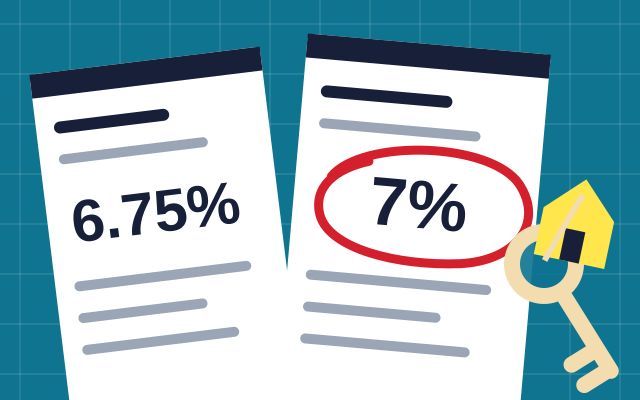
It was 6.75%, locked until December. On the closing paper it is 7%. Nobody mentioned it.
May it go up?
Some closing costs may rise by any amount, some together by ten percent, some not at all.
Ten percent of what?
Of the sum, and only of one group. Add it up and see what has to come back.
Points and rate
Pay now for a lower rate? One division says after how many months it pays.
Everybody else
The owners association, the kitchen, the solar lease, and an email with a new account for your money.
Got a real one in front of you?
Examples that explain themselves, calculators and lists.
- Loan Estimate exampleAll three pages. Press a line to read it, and see how much each charge may go up.
- Closing Disclosure exampleNext to its Loan Estimate, with what changed and whether it may, and a three-day calendar.
- Mortgage points calculatorWhat the points cost, what they save a month, and the month in which they have paid for themselves.
- PMI calculatorThe month you may ask to remove it, the month it ends by itself, and what lies between.
With a real Closing Disclosure in front of you
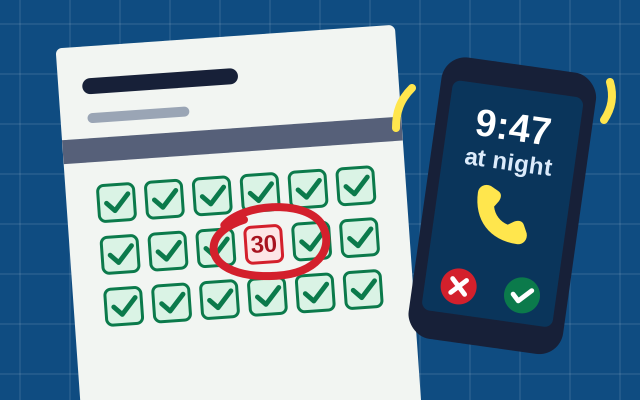
Eight things to check in the three days before you sign. Have the latest Loan Estimate and the contract next to it.
- Read your name and the address letter by letter.The CFPB warns that even minor misspellings can cause big problems later.
- Compare rate, product and loan amount with the Loan Estimate.If the rate was locked, it may change only if your application changed or the lock has run out.
- Look for a YES at prepayment penalty and balloon payment.Both are features the CFPB calls risky. They were on page 1 of the Loan Estimate too.
- Compare section A, and section B of the Loan Estimate.These charges may not be higher than estimated, and neither may transfer taxes.
- Add up recording fees and the services from the lender's list.The sum may be up to 10% higher. A single charge may be more.
- Check lender credits, seller credits and the deposit.Money that is missing there makes the cash to close higher.
- Ask the lender to explain every other difference.Some are allowed: insurance, prepaid interest, escrow, companies you found yourself. You want to hear which.
- Confirm the wiring instructions by phone.Use the number you saved at the start. Emails with a new account are a known scam at closings.
Two papers, one loan
Most people who take a mortgage to buy a home in the United States get two standard forms. The Loan Estimate comes within three business days after the application. The Closing Disclosure comes at least three business days before the closing. The law gives you those days so that you can compare them.
Comparing is dull work, and that is why it is a game here. Every paper you get has a file with it: the estimate, the contract, a note, a rule. Whatever is wrong can be found by reading them.
What may change, and what may not
Regulation Z sorts closing costs into three groups. They hold as long as the rate is locked and nothing about you, the loan or the home has changed.
- Not at all: what the lender charges for the loan, required services from its companies or that you could not shop for, transfer taxes. A lender credit may not get smaller.
- Together by 10%: recording fees, and required services from the lender's list.
- By any amount: property insurance, prepaid interest, the first escrow deposit, companies you found yourself, services the lender does not require.
What the game leaves out
The people, lenders and numbers are made up. Whether a loan is good for somebody is another question than whether its papers agree, and the game only asks the second one. It also leaves out reverse mortgages and home equity lines, which come with other forms.
Home loan: questions people ask
What is the difference between a Loan Estimate and a Closing Disclosure?
The Loan Estimate shows what the lender expects the loan to cost. It has three pages and comes after you apply. The Closing Disclosure has five pages, comes before you sign, and shows the final terms and costs.
Can closing costs go up after the Loan Estimate?
Some can, some cannot. The lender's own charges may not go up unless something changed, such as the loan you asked for, your credit or the appraisal. Recording fees and services from the lender's list may rise together by 10%. Insurance and prepaid interest may change by any amount.
What happens if a charge went up more than allowed?
Without a change in circumstances you are entitled to a refund of the amount above the limit. The lender has 60 days after the closing to pay it.
Are points a trap?
No. They are a price for a lower rate. They become a bad deal if you sell or refinance before the lower payments have paid them back.
Do I need to know mortgages to play?
No. Every word is explained when it first comes up, and the rule that decides a case is printed in its file.
Is this advice about my loan?
No. It is practice in reading. For your own loan, ask the lender first. The CFPB lists housing counselors, and takes complaints.
Where this comes from
- CFPB: Can my final mortgage costs increase from what was on my Loan Estimate?
- Regulation Z, 12 CFR 1026.19(e) and (f)
- CFPB: Loan Estimate explainer
- CFPB: Closing Disclosure explainer
- CFPB: What is a rate lock on a mortgage?
- CFPB: How should I use lender credits and points?
- CFPB: Compare and negotiate your loan offers
- CFPB: Are homeowners' association dues included in my monthly mortgage payment?
- CFPB: Beware of mortgage closing scams (PDF)
- FTC: Solar power for your home
- FTC: How to avoid a home improvement scam
Last changed . Rules change, and states add their own: check the source before you act on one. Found a mistake? How we check, and how to tell us.
Try something else
More like this: financial literacy games, consumer math games, life skills games.
The people, lenders and numbers are made up, and the rules are the federal ones as of the date below. This is not advice about your own loan.