Skip to content

Credit report example, explained line by line

Here is a made-up credit report with all its sections. Press a line of the example to read what it means and what to compare it with. Below it: what is in a report, and what is not.

Press any line to read what it means.

Halvard Credit File
Copy for the consumer

Credit report

File 48-2207 · November 9, 2026

About you

Accounts

Collections

Public records

Inquiries

This report does not include a credit score.

All lines explained
Jordan A. Ellis
The name that lenders have sent in. Compare it with your ID, letter by letter.
Jordan Park
Names you used before may be listed. A name you never used is a warning: somebody else's file may be mixed into yours.
05/1994
Compare the date with your ID.
418 Maple Row, Dover, DE
Where your bills go. If it is not your address, find out which account brought it here.
23 Orchard Lane, Salisbury, MD
Old addresses stay. It is fine as long as you lived there.
Oatwhistle Bakery
A report may list where you work or worked. It does not say what you earn.
Larkmoor Bank card, ending 2214, $640
Individual means that Jordan alone owes it. Paid as agreed means no late payment. Compare the balance and the limit with the statement of that month.
Copperlane Credit Union, student loan, $7,320
One payment came a month late in April 2024. If that is true, it may stay for up to seven years. If the bank's record shows that it was on time, it can be disputed.
Quarrytop Auto Finance, car loan, $12,900
Joint means that two people owe it together. It is in both people's reports.
Pellbrook Bank card, ending 5061, $2,150
Jordan may use somebody else's card. An authorized user is not liable for the charges. If this said “individual”, it would be an error.
Pennyfold store card, ending 8830, $0
Jordan closed it, and it says so. A closed account with good payments may stay on the report for years.
Finchcall Wireless, phone bill, $0
Charged off means that the company wrote the debt off as a loss. It sold it in March 2023, so it is owed nothing, and the balance here should be zero.
Quillmark Recovery, for Finchcall Wireless, $410
The collector that bought the debt. The date is the first missed payment, August 2022. The seven years begin 180 days later, around February 2023, so this line may stay until about February 2030.
None reported
Bankruptcies stand here, for up to ten years. Jordan has none.
Quarrytop Auto Finance
A lender looked because Jordan applied. A hard inquiry you did not cause is worth a question to that lender.
Wrenfield Bank, prescreened offer
An offer by mail. Nobody applied, only Jordan sees this line, and it does not affect a score.
Your own request
Jordan asked for this report. Looking at your own is a soft inquiry.

The reports, people and collectors are made up, and the rules are the federal ones as of the date below. This is not advice about your own report or debt.
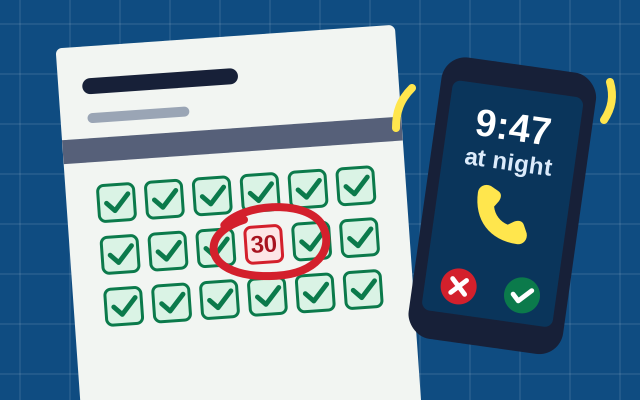
Now find the traps yourself

Credit report game: Strangers write your credit report. Find the accounts, dates and debts that should not be there, and catch the collector who breaks the rules.

Play

In the report, or not?

Ten things people expect to find. Say for each whether it is in a credit report.

  • Your income
  • An address from years ago
  • What is in your bank account
  • A loan you have paid off
  • The interest rate of your loan
  • A debt that a collector has
  • What you bought with the card
  • Overdue child support
  • Who looked at the report
  • Your credit score

What is in a credit report, and what is not
  • Your income: not in it. A report has no information on income or assets.
  • An address from years ago: in it. Current and former addresses are listed.
  • What is in your bank account: not in it. A report has no information on what you own.
  • A loan you have paid off: in it. Old accounts stay, and good history may stay for a long time.
  • The interest rate of your loan: not in it. The amount and the payments are there. The rate is not.
  • A debt that a collector has: in it. Loans and bills sent to collections are listed.
  • What you bought with the card: not in it. The balance is there. What it was spent on is not.
  • Overdue child support: in it. A child support agency may report it.
  • Who looked at the report: in it. Those are the inquiries.
  • Your credit score: not in it. In most cases not. It is worked out from the report.

How to read a credit report

Start at the top. Most people begin with the debts, and miss that the report is partly about somebody else.

  1. About you. Every name, every address. One that is not yours is the thread to pull: the account that came with it is somewhere below.
  2. Accounts. For each: is it mine? Is it open or closed? Who owes it: individual, joint, or authorized user? Are the balance and the limit the ones on the statement?
  3. Late marks. Look at the month, then look up that payment at your bank.
  4. Collections. Is it paid? Is it there a second time under the old company's name? What is the date of the first missed payment?
  5. Public records and inquiries. A bankruptcy with its date. Then everybody who looked: did you apply there?

The sections, and how long things stay

Negative information generally stays for up to seven years. For a debt in collection, the seven years begin 180 days after the first missed payment that led to it, whoever owns the debt now. A bankruptcy may stay for ten. Good accounts have no such limit and may stay longer.

The limits do not apply to a report for $150,000 or more of credit or life insurance, or for a job that pays $75,000 or more a year. Hard inquiries are seen by others who buy your report. Soft inquiries are seen only by you.

For students and classes

The sample works on a projector and prints on two pages. Three things to do with it in a lesson:

  • Cover the explanations and let each group explain five lines in their own words.
  • Jordan applies for an apartment. Which three lines would a landlord ask about, and what could Jordan answer?
  • Find the two lines that belong to the same debt, and say why that is not an error here.

Then play the first level of the game: three reports, four minutes, no sign-up.

Questions people ask

Is a real credit report laid out like this example?

The sections are the same: who you are, accounts, collections, public records and inquiries. The look differs, because Equifax, Experian and TransUnion each print their own. This sample copies none of them.

Why are my three reports different?

Lenders do not have to report to all three companies, and each company keeps its own file. An error can be in one of them and not in the others, so look at all three.

Does a credit report show my credit score?

In most cases not. A score is worked out from the report by a formula, and there are many formulas. The free reports come without one; you can ask for a score, and may have to pay for it.

Does looking at my own report hurt my score?

No. Your own request is a soft inquiry. Only you can see it, and it does not affect a score.

More about credit report