Today, 10:54 am
Your parcel is on hold, the street number is missing. Please pay $2.95 for a new delivery: within 12 hours, or it goes back.
Reply STOP to opt out.
Texts, emails, calls and letters from the whole street. Spot the scam, and do not accuse the honest ones.
A free spot the scam game: 7 levels and an endless one. No sign-up, no download.
3 minutes. Every step explained. No sign-up.
Try one right here.
Frank: I ordered two wool blankets from Moss & Mitten on Thursday. They ship with Parcelstoat. Its site is parcelstoat.com.
Today, 10:54 am
Your parcel is on hold, the street number is missing. Please pay $2.95 for a new delivery: within 12 hours, or it goes back.
Reply STOP to opt out.
7 levels. Each adds one kind of trap and keeps the old ones. Start anywhere; the marked one is next for you.
A name can be typed by anybody. The full address, the number and your own papers say whose message it is.
An address is read from its end. The part in front can say anything, and often does.
A job, a prize and a buyer bring money. When they want some first, the direction is wrong.
The code on your phone, the numbers of a gift card, your savings moved “to safety”.
Bad news, rude buyers and strict letters can be real. Nearly half of the messages here are.
Examples that explain themselves, calculators and lists.
Seven things to do before you answer it. They take two minutes, and an honest sender can wait.
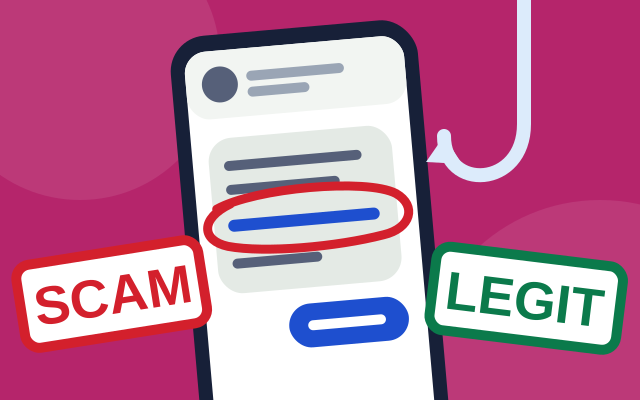
Somebody from the neighborhood shows you a message and says in one or two sentences what they know: what they ordered, who they bank with, what is printed on their card. You may press the sender, the link, the sticker or the attachment to look closer. Then you decide: scam or legit.
After a scam comes the second question, and it is the better one: what gave it away? The message falls apart into its sentences, and you press the one that no honest sender would have written. There are 100 messages, 55 scams and 45 honest ones, and names, sums and companies change from play to play.
A scam awareness quiz in which every answer is “scam” teaches one thing: to say scam. Out there the bank does text about a strange payment, the power does go off on Thursday, and the store does want its kettle back. Who takes those for scams misses the recall, and in the end stops looking.
So the honest messages in this game look bad on purpose. They have links, deadlines and poor manners. What makes them honest is that they fit what you already know, lead where they say, and ask for nothing that could hurt you.
A parcel text, a call from the court and a puppy ad have little in common, except this. They want one of four things, and they want it before you have asked anybody.
It is free, and there is nothing to sign up for. It runs in the browser of a phone or a computer, and your stars are kept on your own device.
No. The game does not read your messages and cannot tell you whether a real one is a scam. The checklist above helps you find out, and the surest way is to contact the company or office with a number or address you had before.
They are written for the game. The people and companies are invented, the tricks are the ones that the Federal Trade Commission, the FBI, the IRS and other agencies describe. The main sources are listed below.
No. The FCC calls it spoofing: a caller falsifies the name or number on your screen, and can use one you know. Hang up and call the number on your statement, your card or the agency's website.
Fast is better than slow. The FTC's page “What to do if you were scammed” says whom to call for each way of paying: the card company, the bank, the gift card company, the payment app. Then report it at ReportFraud.ftc.gov.
For both, and for everybody who has a phone. The first level is guided and has no clock, so it can be played alone, with a parent, or on a screen in front of a class.
Last changed . Rules change, and states add their own: check the source before you act on one. Found a mistake? How we check, and how to tell us.
More like this: critical thinking games, life skills games.
The messages, people and companies are made up for practice. The game cannot tell you whether a message you received is real.