What a dark pattern is
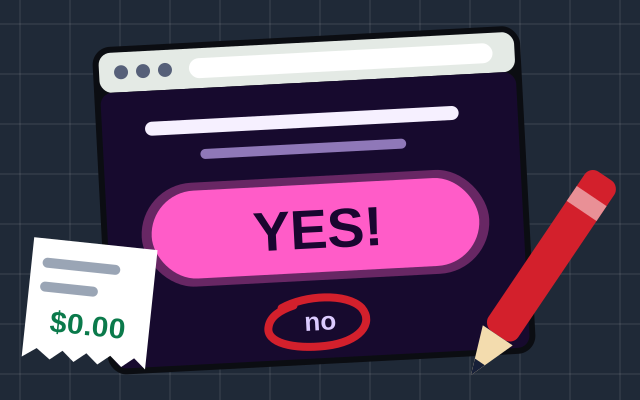
A dark pattern is a design that gets you to do something you did not mean to do: buy, share, agree or stay. The Federal Trade Commission describes dark patterns as design practices that trick or manipulate users into making choices they might not otherwise have made.
They are common. In a review of 642 websites and apps that sold subscriptions, made by consumer agencies of 26 countries and announced by the FTC in July 2024, nearly 76% used at least one possible dark pattern. The ones found most often hid information or preselected an option.
How the game works
You get one errand and a website that works. Everything on it can be pressed. The right press takes you on, the wrong one sends you back or lands on your bill. At the end you see what the site wanted and what it got.
Nothing is hidden where you cannot reach it. The trick is always in the words, the order, the size or the color, so the proof is always on the screen. Some screens are honest. A countdown does nothing at zero except say so.
What is made up and what is real
The companies, prices and jokes are made up. The tricks are the ones that regulators describe, and some of them run into a rule:
- To cancel a subscription sold online, there must be a simple way to stop the charges. That is the federal law called ROSCA.
- Live-event tickets and short-term lodging such as hotels: since May 12, 2025, a federal rule asks for the total price upfront. Taxes, shipping and extras you choose yourself may come later.
- Consent: California's privacy rules say that the way to the more private choice may not be longer or harder than the way to the other one, and that choices must not use double negatives.