Skip to content

Debt validation letter: a template to fill in

Two papers have this name. One is the validation notice a collector has to send you. The other is the letter you send back to dispute the debt. Here are both: a template to fill in, and a sample notice explained.

Make it yours

The letter changes while you type. Nothing you type is sent or stored; it is gone when you leave the page.

Why do you dispute it?
And

[Your name][Your address][Date]

[Collector's name][Collector's address]

Re: [number on the notice]

I am writing about the debt in your notice of [date of the notice]. I dispute all of it. I do not recognize it.

Please send me verification of the debt, or a copy of a judgment. If this dispute is within the validation period of your notice, 15 U.S.C. 1692g(b) and 12 CFR 1006.38 require you to stop collecting the amount I dispute until you have sent it.

Please also send me the name and address of the original creditor, if it is different from the current creditor.

If you report this debt to a credit bureau, or have done so, please report that it is disputed.

Sincerely,

[Your name]

The reports, people and collectors are made up, and the rules are the federal ones as of the date below. This is not advice about your own report or debt.

Now find the traps yourself

Credit report game: Strangers write your credit report. Find the accounts, dates and debts that should not be there, and catch the collector who breaks the rules.

Play

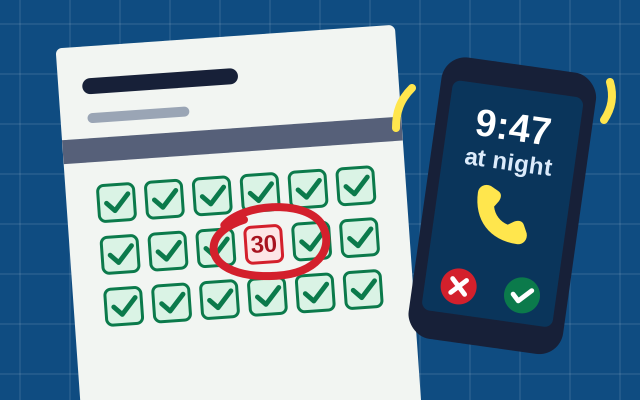
Count your 30 days

30 days later is Saturday, December 5, 2026.

The notice has to print the last day the collector counts. It may assume that the mail takes five business days, so the two dates can differ. The earlier one is the safe one.

Sample validation notice, line by line

This is what a collector has to send you, at first contact or within five days of it. The names are made up; the sentences follow the federal model form.

Press any line to read what it means.

Tarnhill Receivables
P.O. Box 2214, Dayton, OH 45401

Notice about a debt

Reference 584-345 · November 2, 2026

Our information shows

How can you dispute the debt?

What else can you do?

How do you want to respond?

The whole notice explained
To: Jordan A. Ellis, 418 Maple Row, Dover, DE 19901
Your name and address, and at the top the collector's, where it accepts disputes. Compare the collector's address with its website or your state's register before you write.
Tarnhill Receivables is a debt collector. We are trying to collect a debt that you owe to Larkmoor Bank. We will use any information you give us to help collect the debt.
A first notice has to say that they are trying to collect a debt, and that they will use what you tell them for it. So think before you tell them much.
You had a credit card from Larkmoor Bank with account number ending in 7730.
For a debt from a loan or a card it names the creditor you owed on that date, and shows the account number or the end of it. Look for a statement with that number.
As of June 1, 2026, you owed, $800.00
The itemization date. It is the date of the last statement, the charge-off, the last payment, the purchase or a judgment. Find your own paper of that time and compare.
Between then and today: interest, $40.00
Interest since then. They may ask for it only if the agreement or the law allows it. Here: 1% a month of $800 for five months is $40.
Between then and today: fees, $0.00
Fees since then. Same rule. A “collection fee” that neither the agreement nor the law allows may not be added.
Between then and today: you paid or were credited, -$100.00
What you paid or were credited since then. If a payment of yours is missing, this is the line to dispute.
Total amount of the debt now, $740.00
Do the sum: 800 plus 40 plus 0 minus 100 is 740. If your sum is different, dispute the amount.
Call or write to us by December 9, 2026, to dispute all or part of the debt. If you do not, we will assume that our information is correct.
The last day they count. The time is 30 days after you get the notice; they may assume that it took at least five business days to arrive. “We will assume” sounds harsh, and the rule wants it said.
If you write to us by December 9, 2026, we must stop collection on any amount you dispute until we send you information that shows you owe the debt.
The most useful sentence in it. In writing and in time: then they have to stop until they have sent proof, or a court judgment.
Write to ask for the name and address of the original creditor, if different from the current creditor. If you write by December 9, 2026, we must stop collection until we send you that information.
Debts are sold. If you do not know the name, ask who the first creditor was. That request, in writing and in time, makes them stop too.
Go to www.cfpb.gov/debt-collection to learn more about your rights under federal law.
Needed when the debt is for a consumer financial product, such as a credit card. A phone bill or a gym may come without it.
Check all that apply: I want to dispute the debt because I think: This is not my debt. The amount is wrong. Other.
The notice has to bring this form with it. You may use it, or write a letter of your own, as on this page.
I want you to send me the name and address of the original creditor.
A second box for the original creditor.
What has to be in the notice

  • that it comes from a debt collector, with its name and mailing address;
  • your name and address, and the account number or part of it;
  • the creditor you owe now, and for a loan or a card the one you owed on the itemization date;
  • the amount on that date, the interest, fees, payments and credits since, and the amount now;
  • the last day to dispute, and what happens if you do, in writing, and if you do not;
  • a form to send back.

The collector may also give this by word of mouth in the first talk. If no notice comes after a first contact, you can ask for it in writing.

What a dispute does, and what it does not

A dispute in writing within the 30 days presses pause: they have to stop collecting what you dispute until they send you verification of the debt or a copy of a judgment. If they report the debt to a credit bureau, they have to say that it is disputed.

It does not cancel the debt, and you might still be sued over it. After the 30 days you can still ask for proof. They are then not bound to stop. Send the letter by certified mail with a return receipt, and keep a copy: then you can show what you sent and when they got it.

Questions people ask

How long do I have to dispute a debt?

Thirty days after you get the validation notice. The notice has to print the last day. Write by then: a dispute in writing makes the collector stop until it sends proof.

Is calling enough?

You may dispute by phone, and then the collector may not assume that the debt is valid. But only a dispute in writing in the 30 days makes it stop collecting until it has sent proof.

What does the collector have to send me?

Verification of the debt, or a copy of a court judgment. If you ask in writing within the 30 days for the original creditor's name and address, it has to send those too. You can ask for more; it does not have to send everything you ask for.

Does a debt go away if I dispute it?

Not by itself. If the collector sends proof, it may go on collecting. Until it has, it may not. And by law, not disputing is no admission that you owe it; the collector will only assume so.

Is this letter stored anywhere?

No. It is put together on your device and is gone when you leave the page. Copy or print it first.

More about credit report